

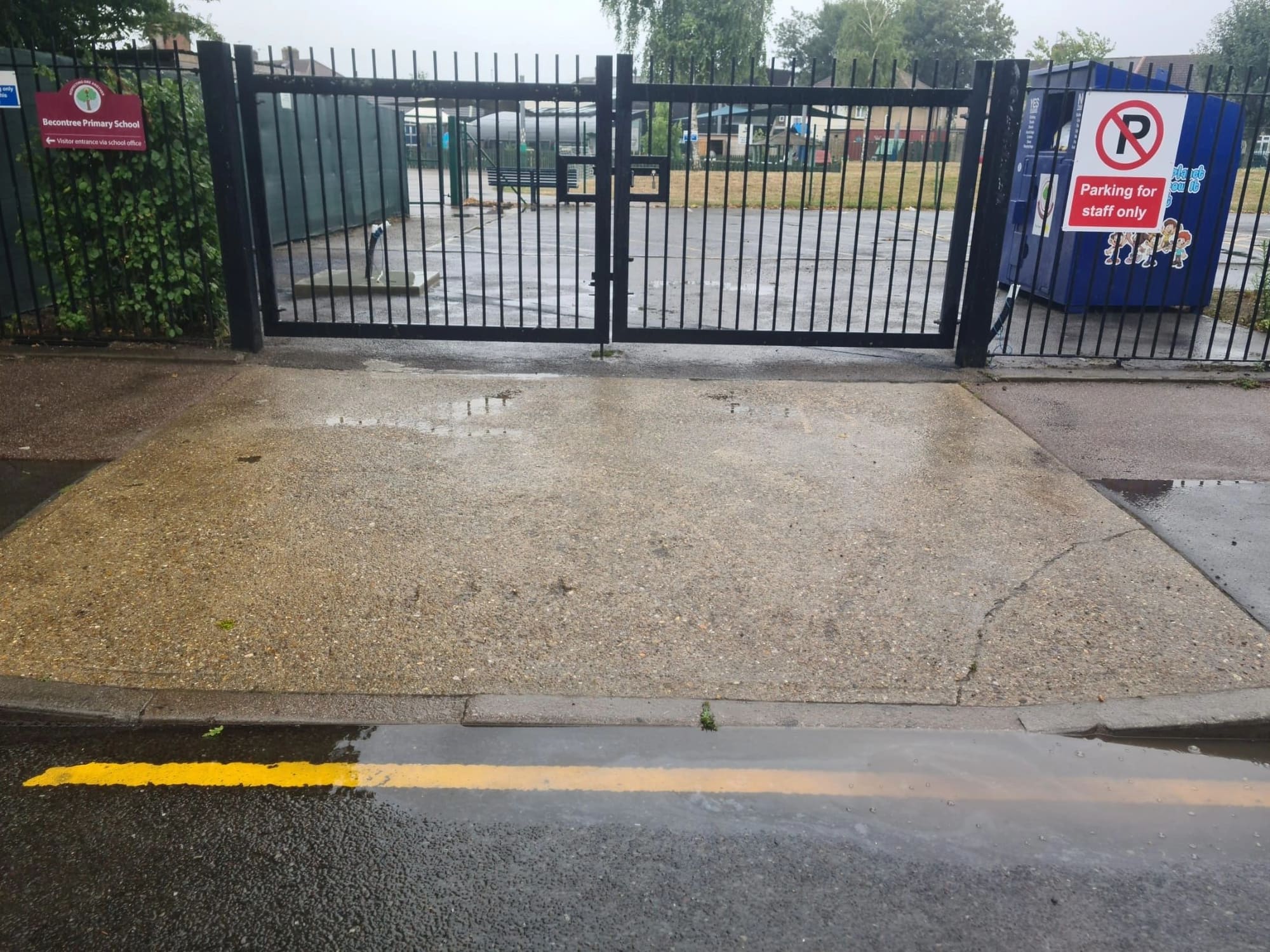
Development groundworks
Everything from site strip and reduced dig through to foundations, drainage and the ducting for an entrance system. Needed when the ground has to be dealt with once, before anything is built on top of it.
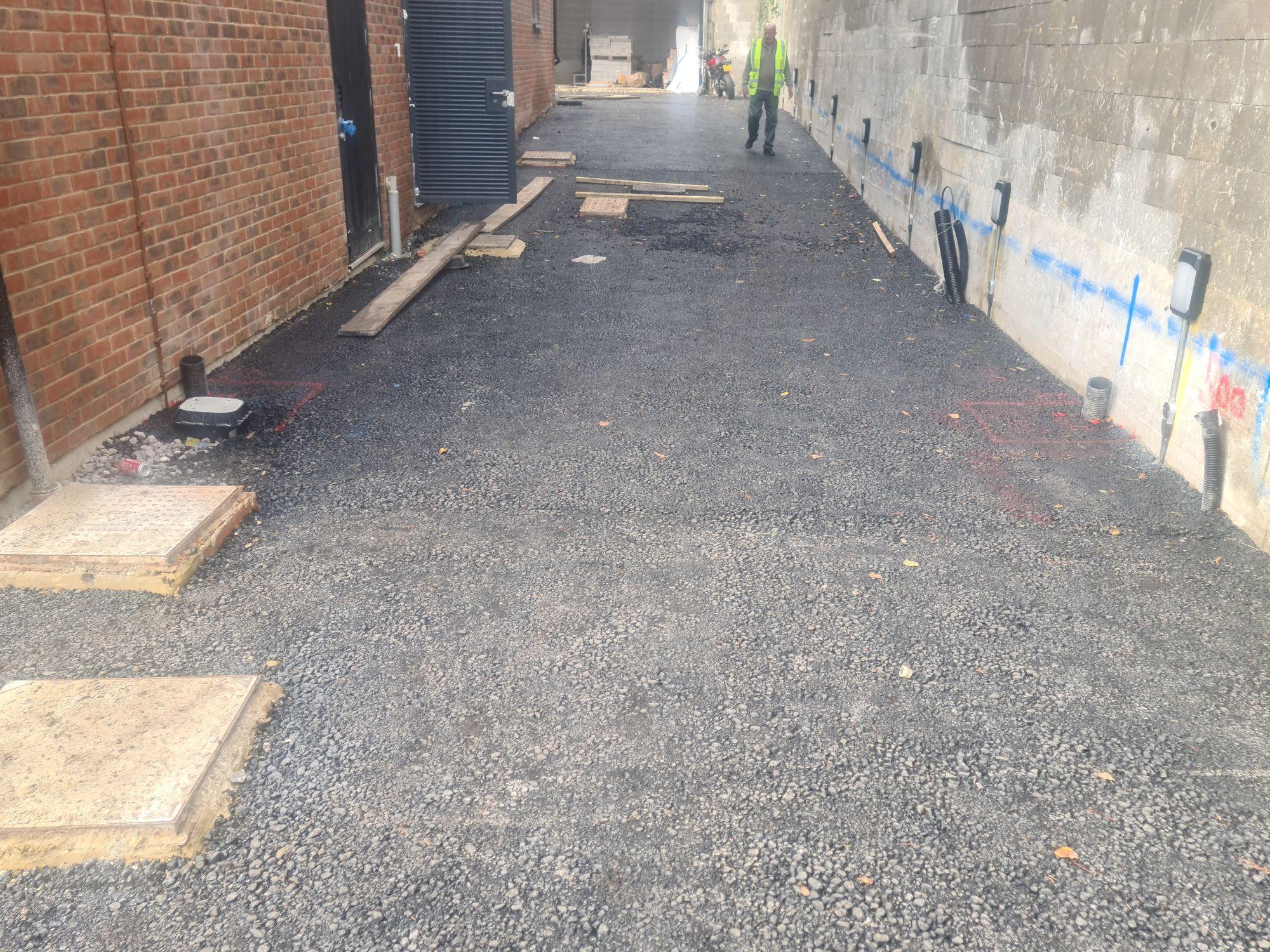
Access solutions
Excavation, drainage, service trenches and ducting, dug by our own team and put back so the ground above stays sound long after we have gone.
Groundworks covers everything that happens before anybody sees a finished surface. Site strip and reduced dig, foundations and bases, trenches for power and data, drainage runs and soakaways, new service connections and diversions where a main sits in the wrong place. We do all of it with our own diggers and our own people, then surface over the top ourselves.
The first question on any dig is what is already down there. We survey the ground before we break it, including a GPR survey where the site warrants one. Old drawings are frequently wrong, and the depth of a buried service changes every time somebody resurfaces above it. Anything live is dug around by hand, and anything we cannot safely move is designed around.
The most expensive mistake in groundworks is backfill. Tip the spoil back into the trench, give it one pass with a plate and it looks perfect on handover day. Then it settles. Six months later there is a dip across the driveway, the tarmac has cracked along the line of the trench and water is finding a way in. Backfill goes in layers, compacted layer by layer, in material that will hold.
Getting this right costs little, and putting it right later costs a lot. What you pay for the second time is breaking out the resin or tarmac laid over it, matching a surface that has since weathered, and taking the entrance out of use while it happens.
Two decisions are worth making early. Lay more duct than you need now, with draw cords in it, because a spare duct costs very little today and a second trench costs a great deal later. And settle where the water goes before the levels are set, since a soakaway needs ground that will genuinely take it and a percolation test tells you that in an afternoon.
Everything from site strip and reduced dig through to foundations, drainage and the ducting for an entrance system. Needed when the ground has to be dealt with once, before anything is built on top of it.
Falls, gullies, channel drains and a soakaway sized for the ground it sits in. The answer where surface water stands, a yard floods, or new hardstanding has nowhere to drain to.
Trenching, ducting and draw cords for power, control cabling and data, plus new connections and diversions where a service runs through the wrong place. Best done before the surface goes down.
On site
The same five stages every time, with the programme written down before anybody starts digging.
Book a site visitWe come out and look at the ground, the power, the drainage, the traffic and the risk, and take measurements on site instead of guessing from a photograph.
A drawing and an itemised quotation naming the exact equipment, so you can compare it like for like with anyone else you have asked.
Excavation, drainage, ducting and foundations, carried out by our own team to the programme we agreed.
Fit, wire, set the force limits, prove the safety devices and test the whole system before anybody signs it off.
The paperwork, and a walkthrough for whoever uses it every day.
Common questions
Yes. Service location comes before the first bucket on every job, including a GPR survey where the site warrants one. Drawings go out of date, and the depth of a cable changes every time the surface above is relaid. Anything live is dug by hand, which is slower on the day and far cheaper than the alternative.
It will if the trench is filled in badly. Spoil tipped back and given one pass with a plate looks fine on the day and settles over the following winter, which is when the crack appears in the surface above. We fill in layers, compact each layer, use material that will hold, then reinstate the surface ourselves.
Yes. We take on groundworks and utilities as a job in their own right, whether or not there is any access work attached. What we will ask for is the setting out drawing and the service positions before we dig, because moving a duct once concrete is over it is a different job entirely.
Often, yes. Connecting into a public sewer needs the water company's agreement, and drainage on a new build or an extension falls under building control. Surface water and foul water usually have to stay separate. We will go through what applies to your site before anything is dug, so it is agreed rather than discovered.
Usually. A micro digger will pass through a standard side gate opening and a mini digger suits most driveways, and where nothing fits the dig is done by hand and barrowed out. The thing worth checking early is where the spoil goes and where the machine can stand, because on a tight urban site both can cost more than the digging.
Machine work as a service in its own right, from a site strip or a trench to breaking out concrete, with the operator included.
Read moreGround penetrating radar surveys that show what is buried under a site before a machine goes anywhere near it, across London and the counties around it.
Read moreTarmac and resin bound surfacing for driveways, car parks, yards and footways, laid on a base we dig and build ourselves.
Read more
Send a photograph and a postcode and we will come back to you with what the site needs.