

Automatic
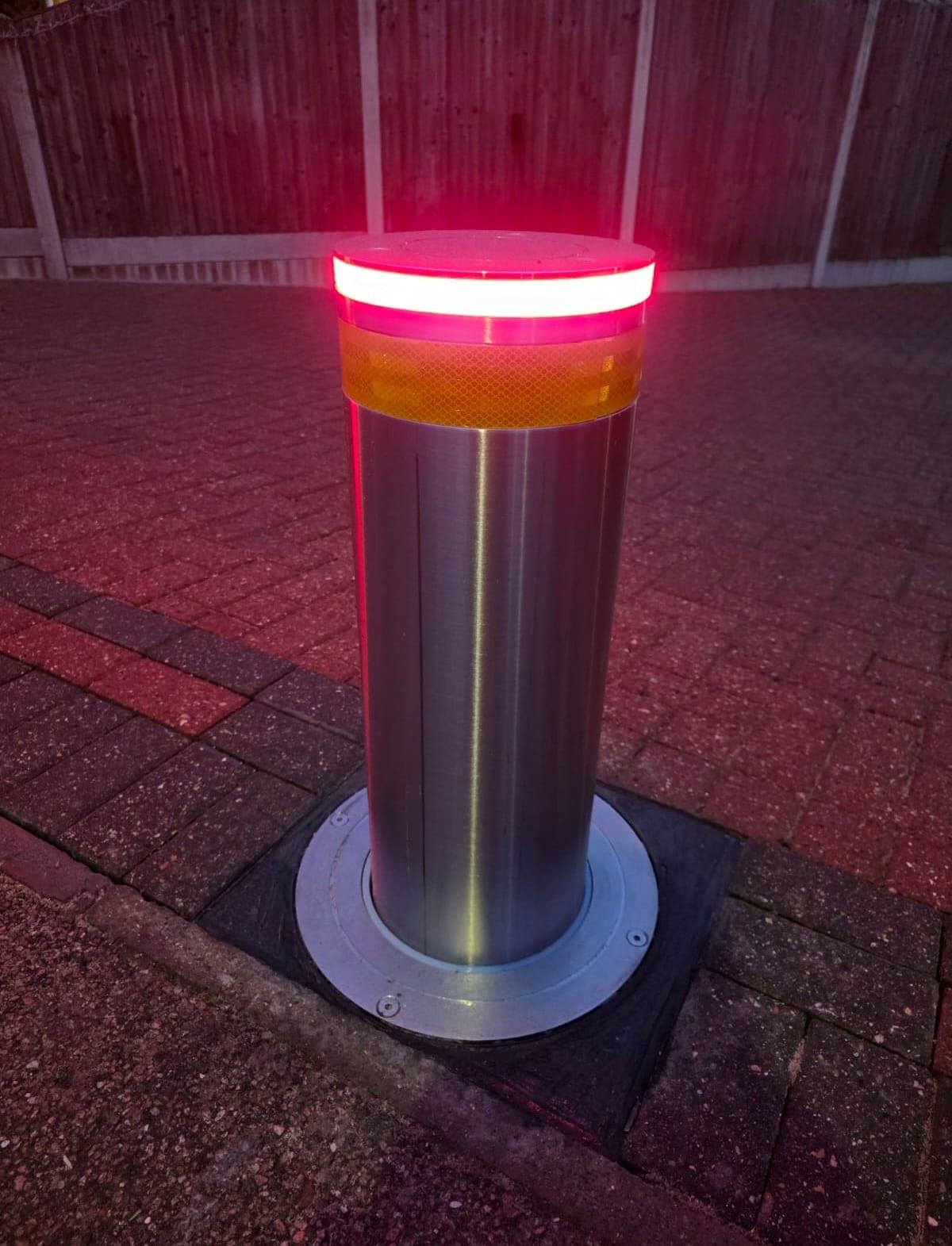
Raised and lowered at the press of a button. Best where the bollard moves many times a day and there is a sensible route to run power and control cable to it.
Access solutions
Vehicle control that lies flush with the ground until it is needed, installed with the groundworks and drainage a bollard depends on.
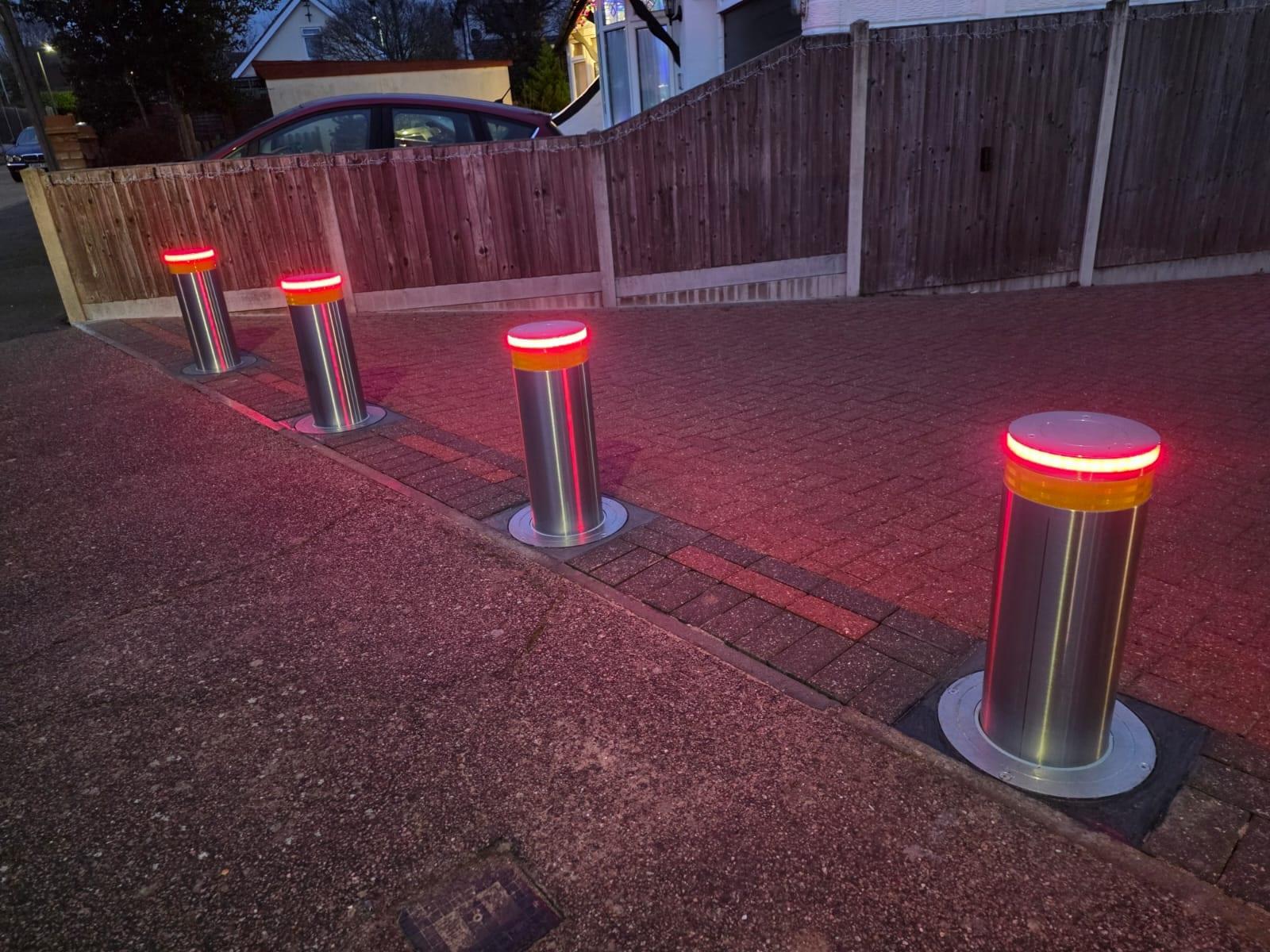
Lowered, a rising bollard is a plate in the ground that traffic drives straight over. Raised, it stops a vehicle while people walk past it as normal. That is why it beats a gate on a shared entrance, a private road, a courtyard or a loading bay, because nothing swings out into the footway and there is nothing to look at when the entrance is open.
A rising bollard rarely fails at the motor. It fails because water is sitting in a housing that was never drained, because the pit was dug to the depth the ground allowed rather than the depth the unit needed, or because the ducting went in after the concrete instead of before it. Every one of those is a groundworks decision, taken before the bollard is out of its packaging.
Most firms fitting automatic bollards buy their digging in. We do not. The excavation, the drainage, the ducting and the surface that goes back over the top are all our own work, so one team answers for what is under the ground and what is on top of it, and the finished entrance does not look like a patch.
Raised and lowered at the press of a button. Best where the bollard moves many times a day and there is a sensible route to run power and control cable to it.
Automatic operation without the cable run. Worth considering where getting power to the spot is the expensive part of the job, as long as someone is happy to keep the batteries charged.
A bollard that does not move. Use it where a line only ever needs protecting, around a shopfront, a substation or the corner of a yard, and it costs a fraction of a moving unit to keep.
On site
The same five stages every time, with the programme written down before anybody starts digging.
Book a site visitWe come out and look at the ground, the power, the drainage, the traffic and the risk, and take measurements on site instead of guessing from a photograph.
A drawing and an itemised quotation naming the exact equipment, so you can compare it like for like with anyone else you have asked.
Excavation, drainage, ducting and foundations, carried out by our own team to the programme we agreed.
Fit, wire, set the force limits, prove the safety devices and test the whole system before anybody signs it off.
The paperwork, and a walkthrough for whoever uses it every day.
Common questions
The bollards we supply can be released and lowered by hand, and we set that up and demonstrate it at handover so someone on site has done it at least once. A battery unit is a different question, because the entrance keeps working through an outage, but only for as long as the charged battery lasts.
That depends on the bollard. One that controls access day to day and one crash tested to a recognised impact standard are different products at very different prices. Tell us what you are protecting against and we will tell you which you need. We will not sell you the expensive one by default.
Often, but it becomes a conversation with the highway authority and the utility companies before it becomes a job. We survey what is buried under the entrance first, including ground penetrating radar where the records are thin, because a bollard pit and a live main in the same place is an expensive way to find out.
Swing, sliding and cantilever gates automated and commissioned to current safety standards, for driveways, yards and secure sites across London and the counties around it.
Read moreArm barriers for car parks, depots and industrial entrances, specified for the number of vehicles that really use the entrance.
Read moreExcavation, drainage, service trenches and ducting, dug by our own team and put back so the ground above stays sound long after we have gone.
Read more
Send a photograph and a postcode and we will come back to you with what the site needs.