

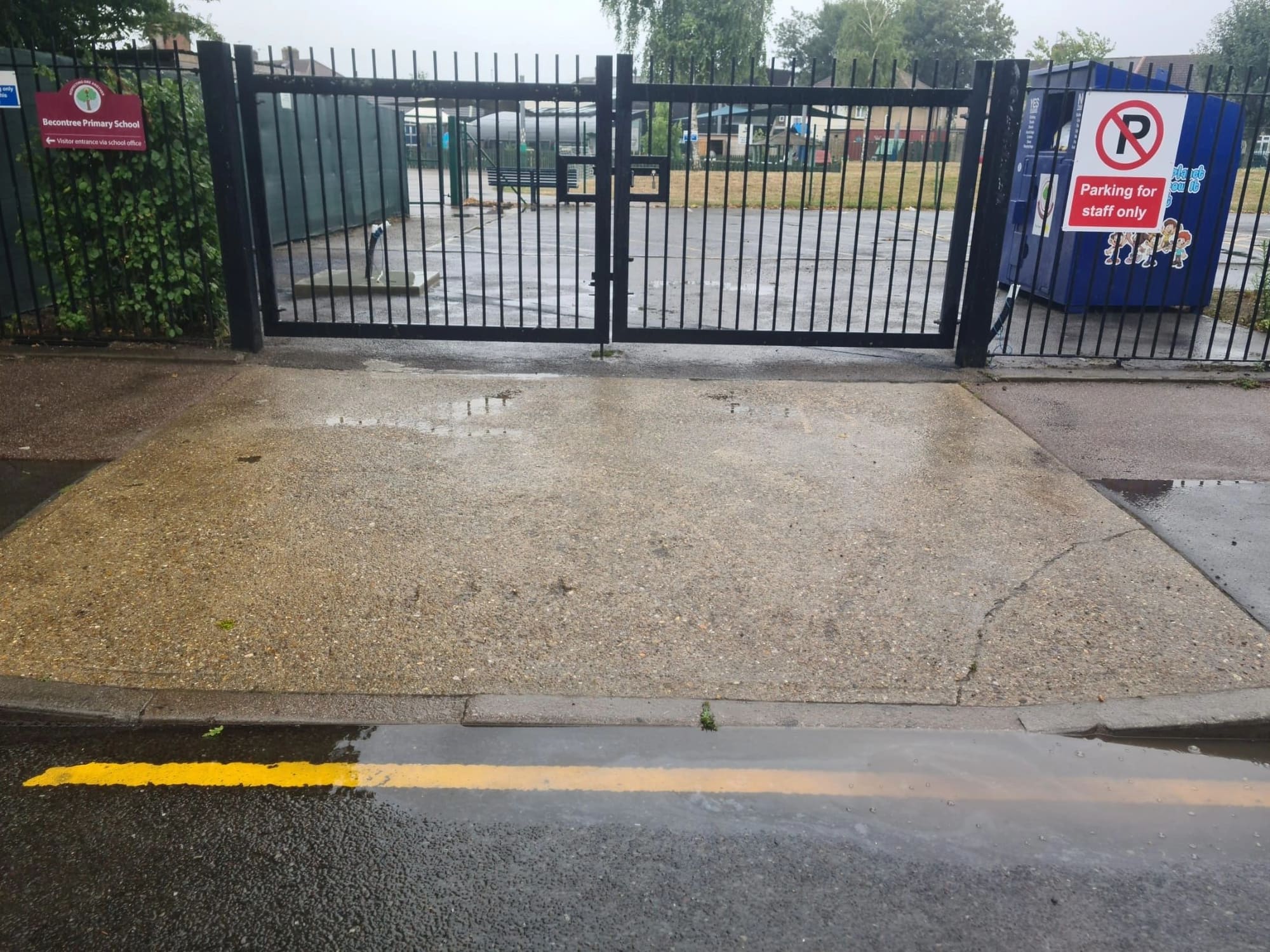
Sliding
Runs on a track across the opening. Suits a wide entrance with level ground and space to one side, and it takes wind loading far better than a swing gate.
Access solutions
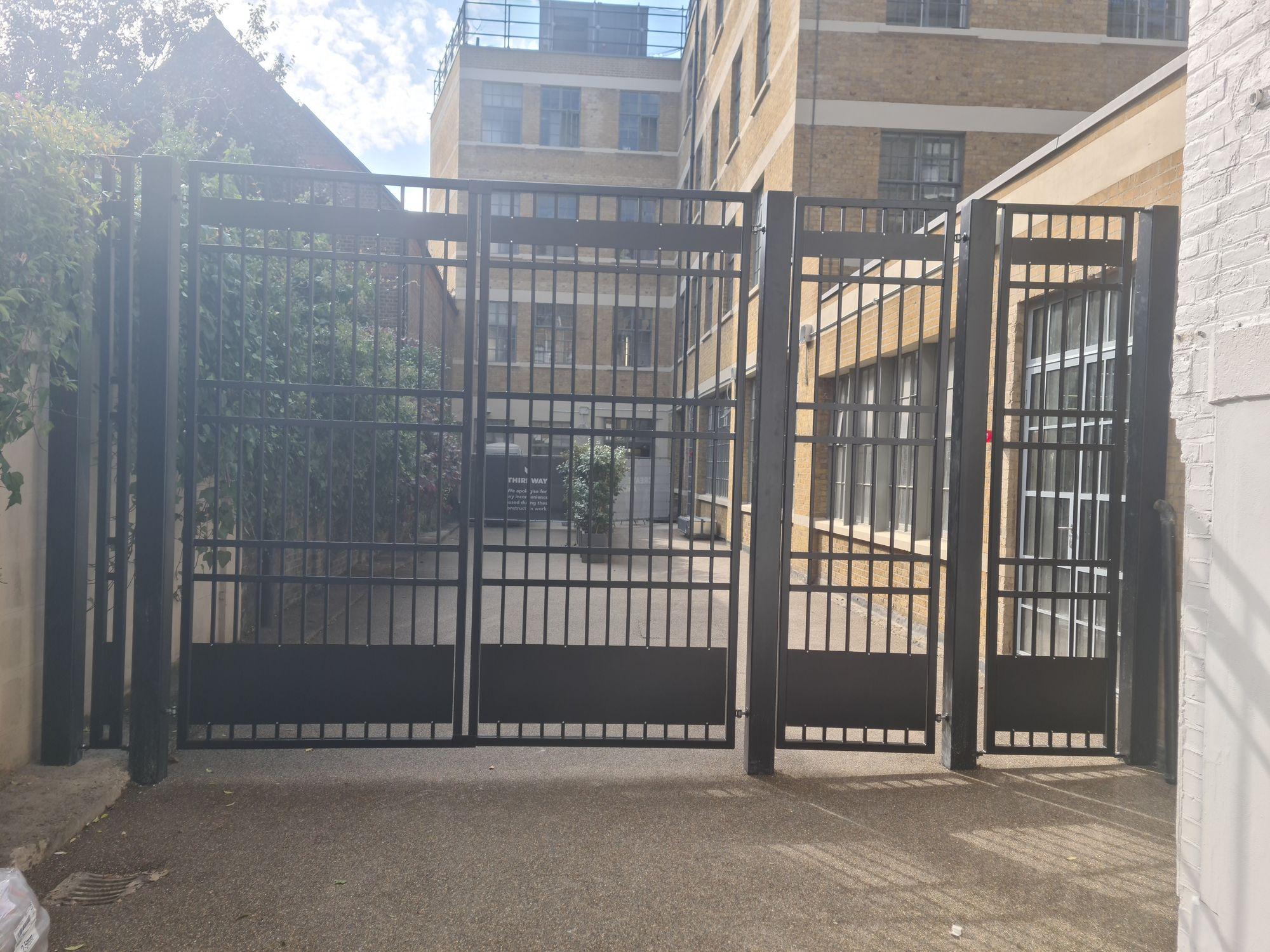
Swing, sliding and cantilever gates automated and commissioned to current safety standards, for driveways, yards and secure sites across London and the counties around it.
A gate motor has to suit the gate it moves. One sized for a lighter leaf than the real one will run hot, wear out and fail in the middle of winter. We survey the gate you have, weigh the leaf, look at the hinges and the ground it runs on, and specify from that.
We install new gates and automate existing ones. Where the gate itself needs replacing we will say so, because a gate never built to move under power will not last with a motor on it. Where the existing gate is sound we keep it and save you the cost.
Most gate faults that look electrical start in the ground. A sliding gate needs a level, continuous foundation under its track, or the leaf drags and the motor works twice as hard to move it. A swing gate needs posts or pillars that do not lean once the weight of a powered leaf is hanging off them. An underground motor sits in a box below the drive, so it needs a drain, or it spends the winter under water.
That is why we do the groundworks ourselves. The foundations, the track bed, the post footings, the ducting for power and control cable and the drainage for the motor are dug and laid by the same team that hangs and automates the gate. Then we bring the drive back over the top in concrete, tarmac or resin, so the finished entrance does not look like a trench was cut through it.
Powered gates are machines in law, which means the force they can apply has to be limited, measured and documented. BS EN 12453 sets how hard a closing gate may push against something in its way and how that force is tested. Every system we commission is set up and force tested before handover, and you get the paperwork.
Runs on a track across the opening. Suits a wide entrance with level ground and space to one side, and it takes wind loading far better than a swing gate.
Carried on rollers set behind the opening, with nothing crossing the ground. Ideal where a track would fill with grit, flood or foul a drainage channel.
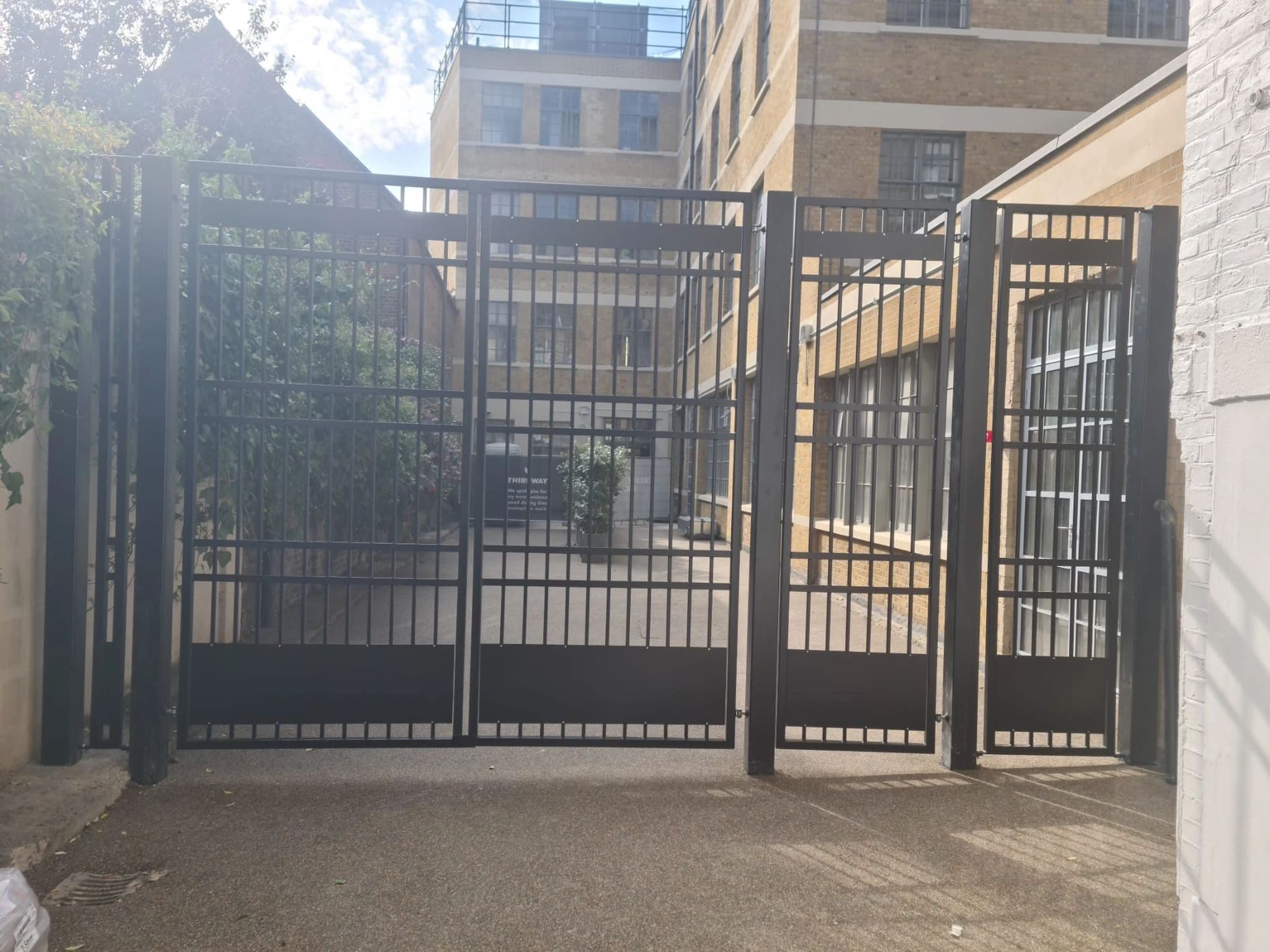
One or two leaves on hinges, driven by rams, articulated arms or motors buried in the ground. The usual choice on residential drives where the gate is part of the look of the house.
On site
The same five stages every time, with the programme written down before anybody starts digging.
Book a site visitWe come out and look at the ground, the power, the drainage, the traffic and the risk, and take measurements on site instead of guessing from a photograph.
A drawing and an itemised quotation naming the exact equipment, so you can compare it like for like with anyone else you have asked.
Excavation, drainage, ducting and foundations, carried out by our own team to the programme we agreed.
Fit, wire, set the force limits, prove the safety devices and test the whole system before anybody signs it off.
The paperwork, and a walkthrough for whoever uses it every day.
Common questions
Often yes. It depends on how the gate is built, how heavy the leaf is and what condition the hinges and posts are in. We survey it first. If the gate will not take automation safely we will tell you, because hanging a motor on a gate that cannot carry it just moves the failure a few months down the road.
Every system has a manual release so you are never locked in or out. Where the gate has to keep working through an outage we fit battery backup, which is the normal choice for a commercial site or anywhere with a single vehicle entrance.
It depends on the job. Automating a sound existing gate is the quicker kind. A new gate with a fresh track, foundations and a power run has to wait for the excavation and for the concrete to cure. You get a programme with the quote, so you know the dates before we start.
Yes. We run the power and the control cabling as part of the job, including the ducting and the trench, so you are not left arranging a separate electrician and a separate groundworker around us.
It comes down to the space you have. A swing gate needs room to open inwards, and a drive that rises behind the gate can stop the leaves clearing it. A sliding gate needs a run of clear ground to one side at least as wide as the opening. If neither fits, a cantilever gate carries itself on rollers set to one side and needs no track across the entrance. We measure all three on the survey before recommending one.
Often not, but it depends on the height and the location. In England a new gate beside a road used by vehicles can usually go up to one metre high without planning permission, and up to two metres elsewhere. A listed building changes the answer, and so can a conservation area where the council has taken those rights away, so check with your local planning authority before anything is ordered. Whatever the height, a gate must not open outwards over the pavement or the road, which is one more reason the swing direction is settled on the survey.
Vehicle control that lies flush with the ground until it is needed, installed with the groundworks and drainage a bollard depends on.
Read moreArm barriers for car parks, depots and industrial entrances, specified for the number of vehicles that really use the entrance.
Read moreExcavation, drainage, service trenches and ducting, dug by our own team and put back so the ground above stays sound long after we have gone.
Read moreSend a photograph and a postcode and we will come back to you with what the site needs.