

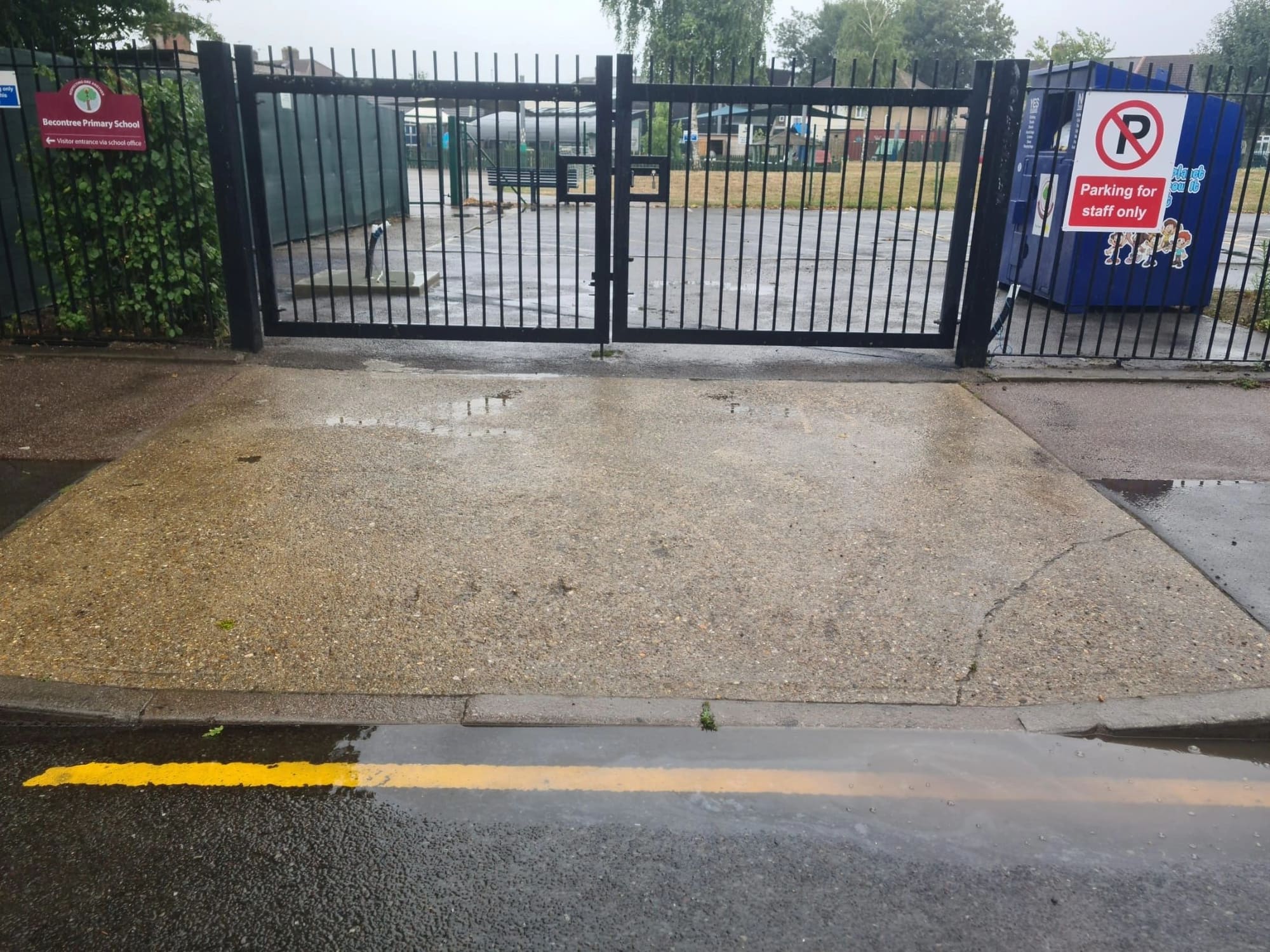
Tight access
Micro and one tonne machines that fit through a standard gateway or down a side alley. For rear gardens, courtyards and anywhere a full size digger simply cannot reach the work.
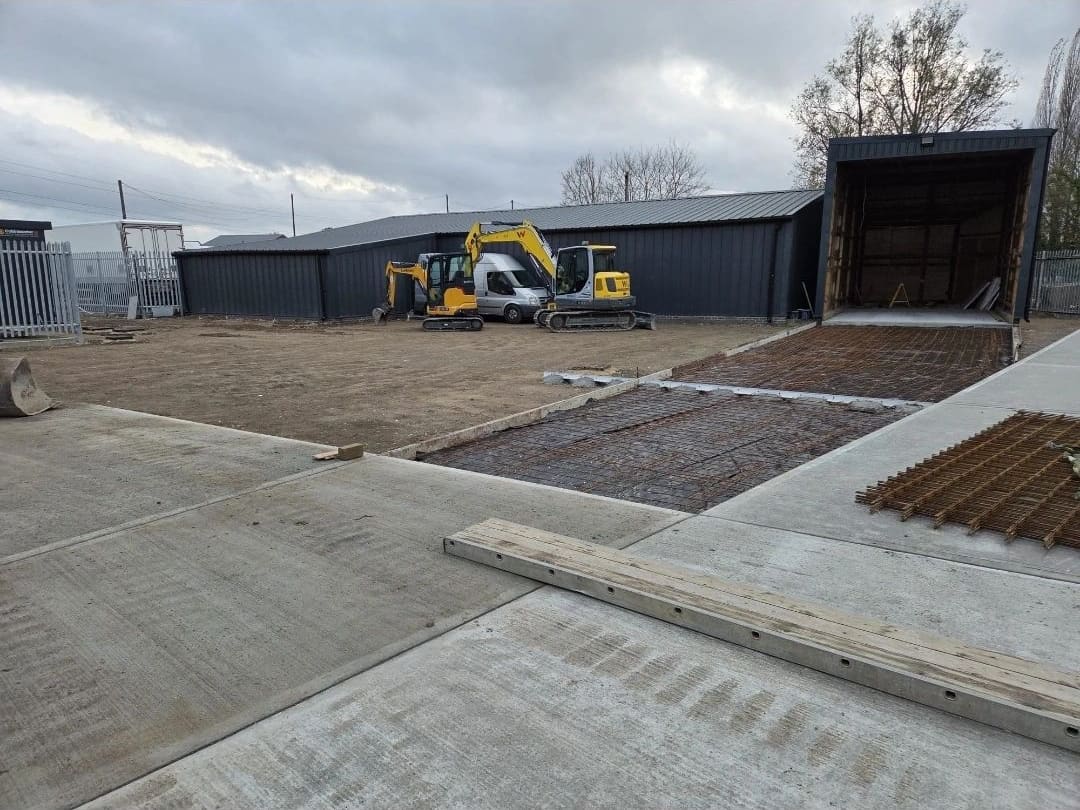
Access solutions
Machine work as a service in its own right, from a site strip or a trench to breaking out concrete, with the operator included.
Digging is a service here, not the bit before the real work. Site strips, reduced dig down to formation, foundation and pit excavation, drainage runs, service trenches, breaking out old concrete and hardstanding, and grading a site back to level. Some of it feeds our own groundworks. Some of it is machine work for other contractors on their sites.
The first thing to check on any dig is access. A three tonne machine wants roughly two metres of clear width and something firm to track over. A micro digger will get down the side of most houses, though it shifts a fraction of the spoil per hour, so the same hole takes far longer. Measure the tightest gate, alley or archway before anybody prices the machine.
Three things are worth sorting before a machine arrives. Where the spoil is going, because a skip, a grab lorry and a tipper each suit a different kind of site. Whether the ground has been searched for buried services. And whether there is anywhere to stand the machine and stack the material while the work is happening.
The risk that matters underground is a service nobody knew was there. Old drives and yards are full of them, and a utility drawing is only a guide. Managing it is boring, and it works. Pull the plans, scan the ground, dig trial holes by hand where anything is expected to cross, then let the machine work between them.
Most firms fitting gates or laying a surface buy their digging in. We own that end of the work, so the people in the machine are the people who pour the concrete and finish the top. Nothing sits half dug over a weekend while two companies argue about whose day it is.
Micro and one tonne machines that fit through a standard gateway or down a side alley. For rear gardens, courtyards and anywhere a full size digger simply cannot reach the work.
Larger machines stripping a site to formation, taking out a slab or a car park, and loading straight into tippers. For jobs where volume is the issue and there is room to work and turn.
A machine and an operator, hired to another contractor for the digging part of their job. Useful when the programme needs the digging done and the rest of the trade is covered.
On site
The same five stages every time, with the programme written down before anybody starts digging.
Book a site visitWe come out and look at the ground, the power, the drainage, the traffic and the risk, and take measurements on site instead of guessing from a photograph.
A drawing and an itemised quotation naming the exact equipment, so you can compare it like for like with anyone else you have asked.
Excavation, drainage, ducting and foundations, carried out by our own team to the programme we agreed.
Fit, wire, set the force limits, prove the safety devices and test the whole system before anybody signs it off.
The paperwork, and a walkthrough for whoever uses it every day.
Common questions
Either off site, or kept on site and reused to backfill or level where the material is suitable. How it leaves is worth deciding early. A grab lorry needs kerbside space, a tipper needs somewhere to turn, and a skip standing on the public highway needs a permit from the council. We settle that before the machine arrives.
Often, yes. The limit is the narrowest point on the whole route, and it is usually a gate post, a meter box or a step rather than the path itself. Measure the tightest gap and the height of any archway. If nothing will fit, the dig is done by hand and the spoil comes out by barrow.
The point is not to. Plans get pulled, the ground gets scanned, and trial holes are dug by hand wherever something is expected to cross, all before a bucket goes near it. If a service turns up that nobody had a record of, work stops and the utility is called before we carry on. Guessing is what causes damage.
It is one of the smallest parts of the job and it prevents the most expensive part. Older drives are full of surprises, where a supply has been rerouted or a soakaway added and nobody ever wrote it down. Scanning takes a fraction of the time that repairing a severed water main takes.
Yes. Machine and operator on your job, working to your setting out. We would rather have the drawing and the service information before we start than be told where the trench runs once the bucket is already in the ground. Where there is no setting out, we will say so, and we will not dig on a guess.
Excavation, drainage, service trenches and ducting, dug by our own team and put back so the ground above stays sound long after we have gone.
Read moreGround penetrating radar surveys that show what is buried under a site before a machine goes anywhere near it, across London and the counties around it.
Read moreGroundworks trades, operatives and machine drivers supplied to contractors and site managers who are short of people, across London and the counties around it.
Read more
Send a photograph and a postcode and we will come back to you with what the site needs.