

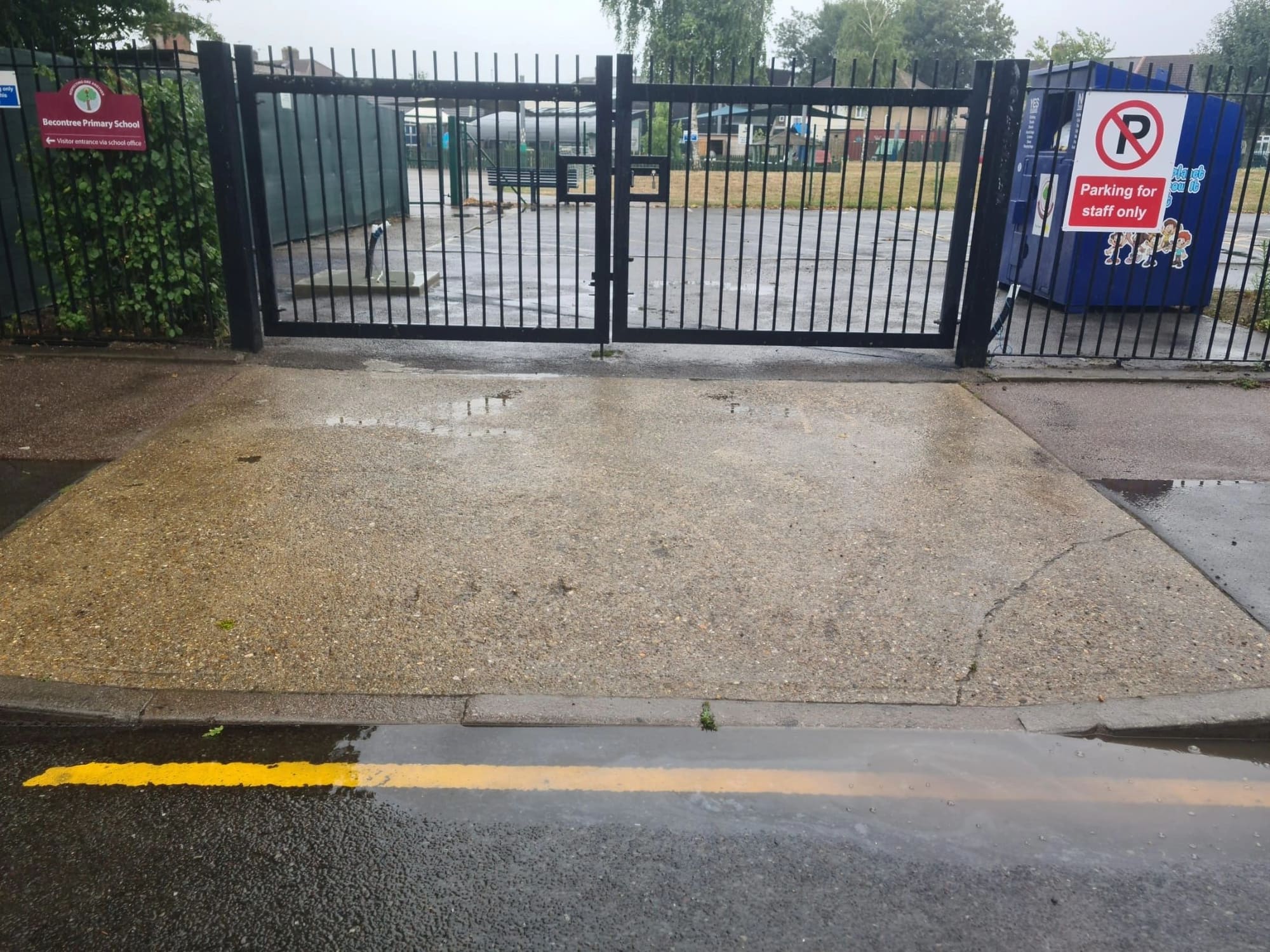
Tarmac
Hot laid bitumen and stone, rolled while it is still hot. Suits car parks, yards, estate roads and long drives, where the area is big, the traffic is heavy and cost per square metre matters.
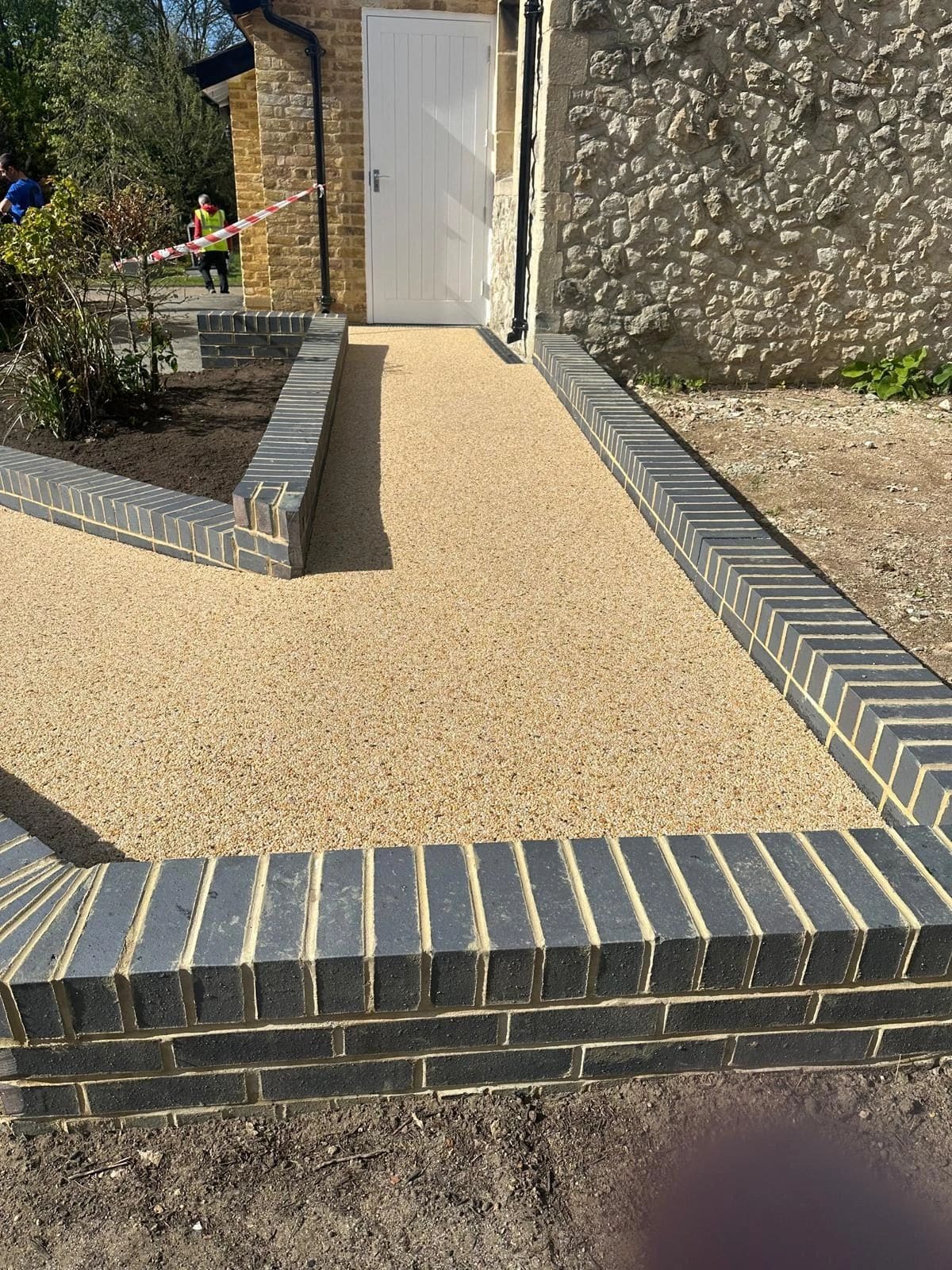
Access solutions
Tarmac and resin bound surfacing for driveways, car parks, yards and footways, laid on a base we dig and build ourselves.
Most failed driveways failed at the base, not at the top. Tarmac and resin are thin. They take their shape and their strength from whatever sits under them, so a soft or badly compacted sub base moves and the surface cracks along the line of that movement. A surface laid over a bad base looks perfect for one winter, then tells the truth in the second.
Tarmac suits traffic and scale. It is the sensible answer for a car park, a yard, an estate road or a long drive, and a big area can go down in a day. Resin bound suits places where the surface is part of the look of the house, and it gives you a smooth stone finish in an aggregate you choose.
Edges do more work than people expect. Tarmac with nothing holding it in crumbles at the sides under the first turning wheel, and resin has to stop against something solid. Kerbs, block edging or a concrete upstand keep the surface where it was laid. Falls matter as much, because water has to run somewhere you chose rather than to the lowest point it finds on its own.
Permeable and sealed are not the same product under a different name. Resin bound laid on a permeable base lets water through it. Standard tarmac does not, unless it is a porous mix. In England, surfacing more than five square metres in front of a house needs planning permission unless the surface is permeable or the water runs to a soakaway or a border inside your own boundary.
Reinstatement after a dig is where surfacing most often goes wrong, because the trench gets backfilled in a hurry and the patch sinks a year later. We dig our own trenches and lay our own surfaces, so the person compacting the backfill is the one who has to come back if it moves. Concrete goes back as concrete, tarmac as tarmac.
Hot laid bitumen and stone, rolled while it is still hot. Suits car parks, yards, estate roads and long drives, where the area is big, the traffic is heavy and cost per square metre matters.
Aggregate mixed all the way through the resin and trowelled flat, so the finish is smooth and water passes through it. The choice where the drive is seen from the house and puddles are not wanted.
Aggregate scattered onto a bed of resin and left loose on top, giving a rougher, grippier surface. It is not permeable, so it needs falls and drainage, and it suits ramps and slopes rather than flat drives.
On site
The same five stages every time, with the programme written down before anybody starts digging.
Book a site visitWe come out and look at the ground, the power, the drainage, the traffic and the risk, and take measurements on site instead of guessing from a photograph.
A drawing and an itemised quotation naming the exact equipment, so you can compare it like for like with anyone else you have asked.
Excavation, drainage, ducting and foundations, carried out by our own team to the programme we agreed.
Fit, wire, set the force limits, prove the safety devices and test the whole system before anybody signs it off.
The paperwork, and a walkthrough for whoever uses it every day.
Common questions
Neither one survives a bad base, so start there. On a well built base, tarmac takes heavy and turning traffic better, and resin bound keeps its appearance longer because it does not scuff and fade the same way. So the real choice is about traffic and looks.
In England, permission is only in question for the front of the house, and only over five square metres. The way round it is drainage, so a permeable surface, or one draining to a soakaway, border or lawn inside your boundary, is allowed. Worth knowing that the base has to drain too. Permeable resin over sealed concrete does not count.
Only if the tarmac underneath is sound, level and well drained, and even then it needs preparing first. Resin is thin and it copies whatever it is laid on, so an existing crack will come through it and an existing puddle will still be a puddle. If the tarmac is past it, the resin goes onto a fresh base instead.
That is set by the material, not by us. Tarmac can be walked on the same day and takes vehicles once it has cooled and hardened, though it stays soft in hot weather for a while afterwards. Resin needs dry conditions to lay and a full cure before wheels touch it. Your programme gives you the dates before we start.
A new patch beside weathered tarmac always shows at first, because the old surface has oxidised and the new one has not. It closes up over a year or two but it never quite disappears. Where the join would sit somewhere obvious, we would rather lay a wider area out to a kerb or a natural edge than drop a square in the middle.
Driveways, paths, block paving and concrete bases, laid by the same team that digs the ground out and builds what sits underneath.
Read moreExcavation, drainage, service trenches and ducting, dug by our own team and put back so the ground above stays sound long after we have gone.
Read moreThe finishing work around a building or a garden, from levels and retaining structures to turf, planting, fencing and the drainage that has to work underneath it all.
Read more
Send a photograph and a postcode and we will come back to you with what the site needs.